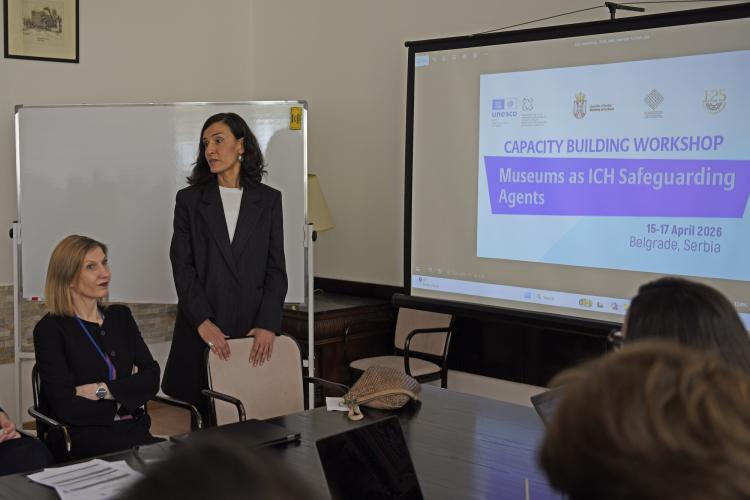
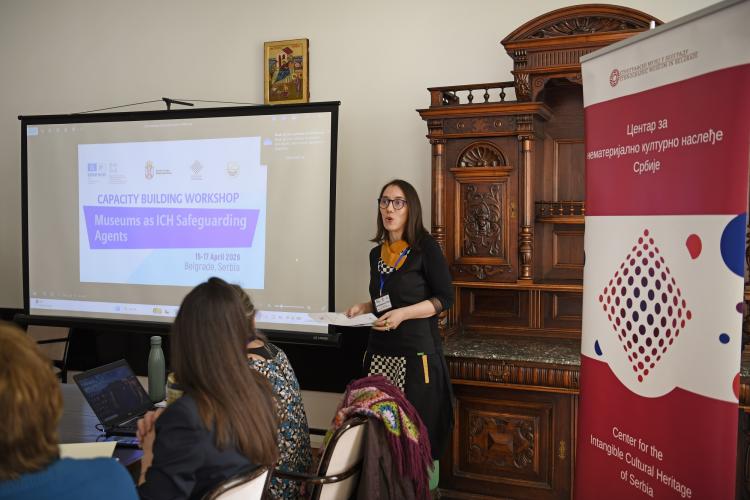
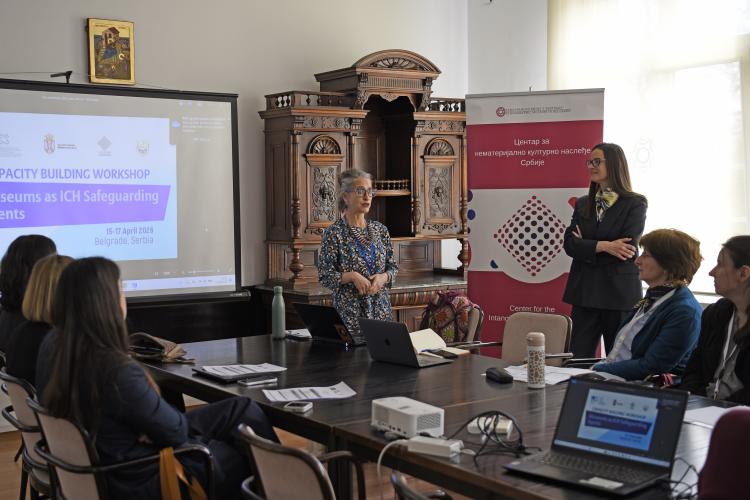
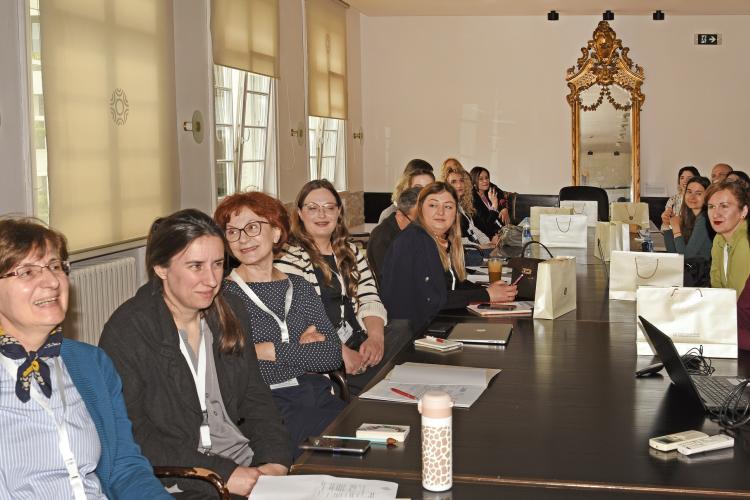
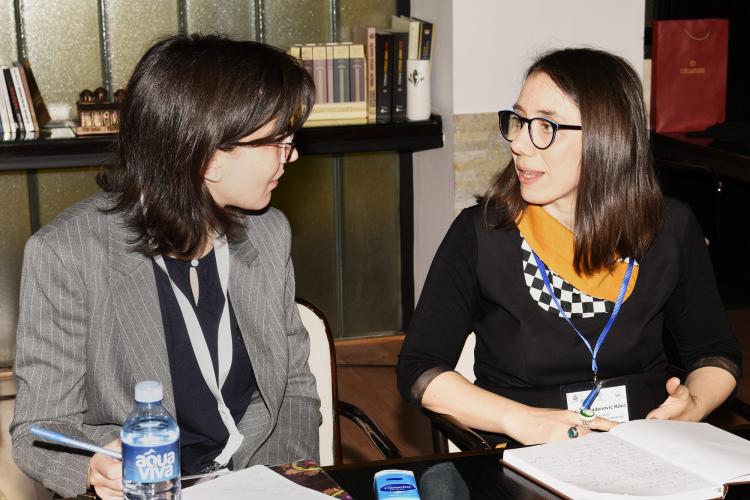
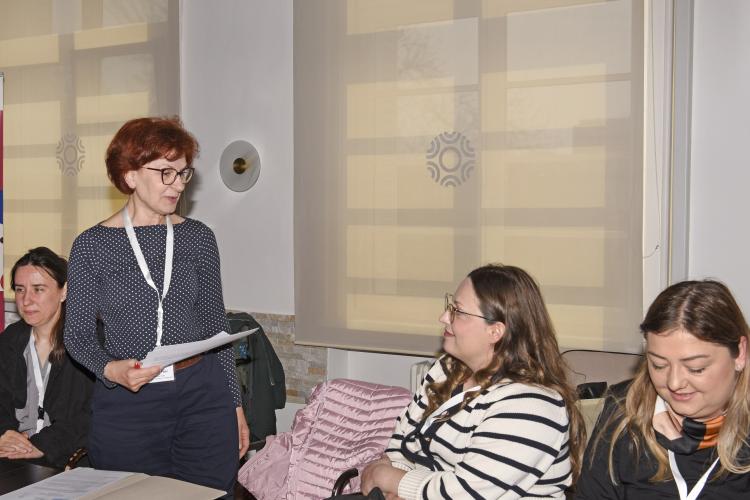
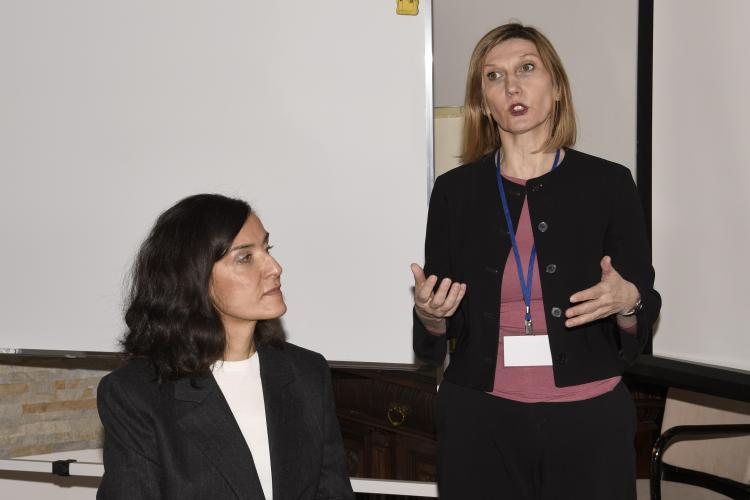
The workshop “Museums as Intangible Cultural Heritage Safeguarding Agents” was successfully held in Belgrade from 15th to 17th April 2026 as part of the Global Capacity-Building Programme, bringing together museum professionals and heritage practitioners to explore the role of museums in safeguarding living heritage.
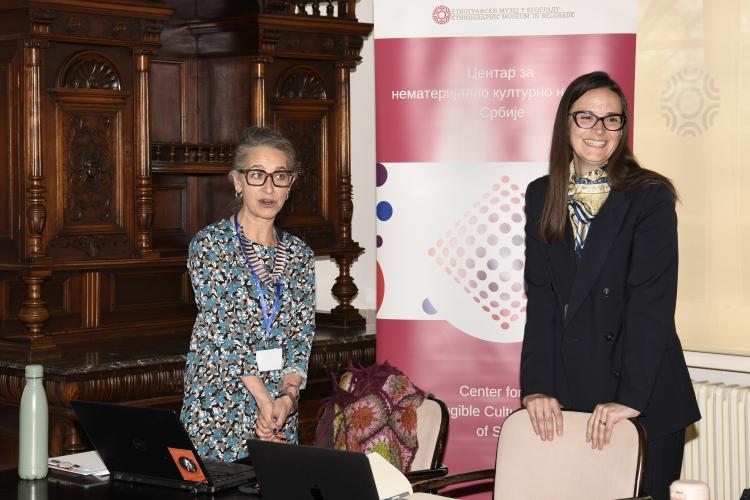
The training was organized by the Regional Centre for the Safeguarding of Intangible Cultural Heritage in South-Eastern Europe (UNESCO Category 2 Centre, Sofia), in cooperation with the Centre for Intangible Cultural Heritage of Serbia and the Ethnographic Museum in Belgrade, with the support of the Ministry of Culture of the Republic of Serbia.
Throughout the workshop, participants engaged with key concepts, approaches and tools related to intangible cultural heritage, with a particular focus on the application of international standards in both museum work and the safeguarding of living heritage, as well as on participatory methodologies. The workshop was grounded in a methodology based on the intersection of museum functions and safeguarding measures for intangible cultural heritage, enabling participants to explore how core museum activities, such as collecting objects, research, documentation, exhibition, and education, can actively contribute to safeguarding processes.
The programme combined theoretical input with hands-on work, guiding participants step by step, from understanding the concept of safeguarding and the role of communities, to developing concrete safeguarding measures within a museum context.
Through the programme, participants learned how to identify and define intangible cultural heritage elements and their communities; understand threats to their viability and define safeguarding priorities; apply participatory approaches and work collaboratively with heritage bearers and design realistic safeguarding plans with clear objectives, results, activities, and evaluation methods.
The practical component of the workshop was structured around group work, where participants developed safeguarding plans for specific elements of intangible cultural heritage.
The final day was dedicated to presenting group results, followed by a collective reflection and evaluation of the workshop. Participants shared their key insights, highlighting the importance of community involvement, the complexity of safeguarding processes, and the relevance of these approaches for their future work.
Many participants emphasized that the workshop provided not only new knowledge, but also practical tools and confidence to apply safeguarding methodologies in their institutions, as well as to share these approaches with colleagues and communities.
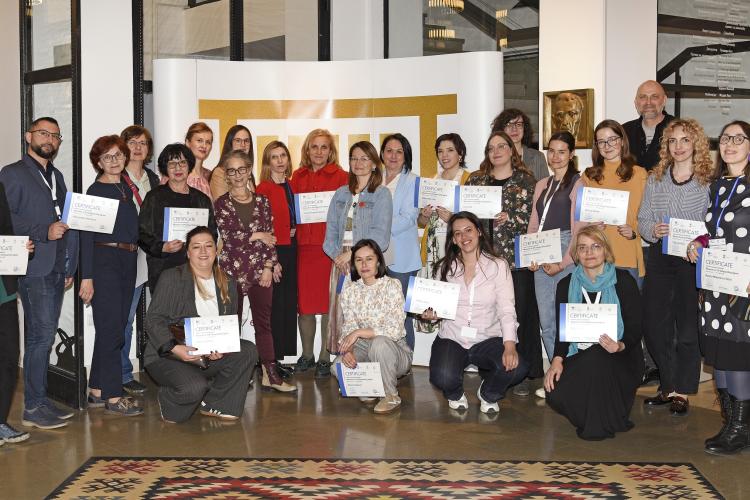
Certificates were awarded by Ms.Panagiota Andrianopoulou and Ms. Tamara Nikolić Đerić, trained facilitators from the UNESCO Global Network of Facilitators for Intangible Cultural Heritage, and Ms. Danijela Filipović, Coordinator of the Centre for Intangible Cultural Heritage of Serbia at the Ethnographic Museum in Belgrade.
We would like to thank all participants for their active engagement, valuable exchange of experiences and ideas, and their commitment to safeguarding living heritage.
Photo: Ivana Masniković Antić, Ethnographic Museum in Belgrade